
Satie
Satie plays quiet music that is written as it plays: felt piano, rain on glass, slow cello and long pauses. It is meant to stay in the background while you work, read or wind down, and it never repeats a loop. The name comes from Erik Satie, who in 1917 began writing what he called musique d’ameublement, furniture music: pieces meant to sit in a room like a lamp rather than be listened to.
Everything runs on your device. There is no account, no subscription and no network access, and Satie asks for no permissions. It is free and open source.
brew install --cask graemecode/tap/satie
Mac · v4.1.1 · macOS 15+ on Apple silicon · 10 MB · six worlds · 8 languages
iPhone & iPad · v3.1.0 on the App Store · iOS 18+ · 12 MB · five worlds · English
Six worlds
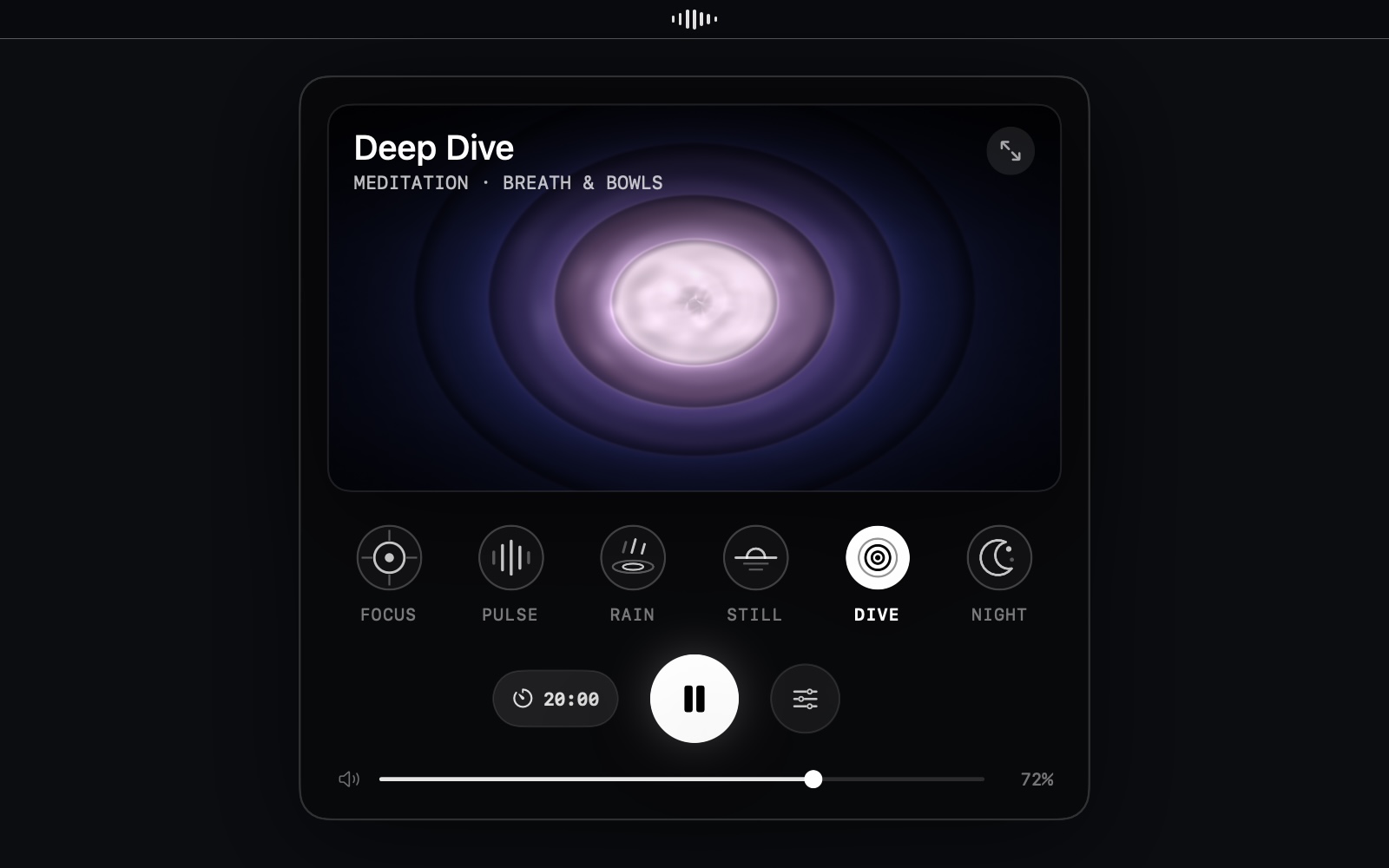
Each world pairs a sound with its own picture. The App Store version has all of them except Deep Dive, which is on the Mac for now.
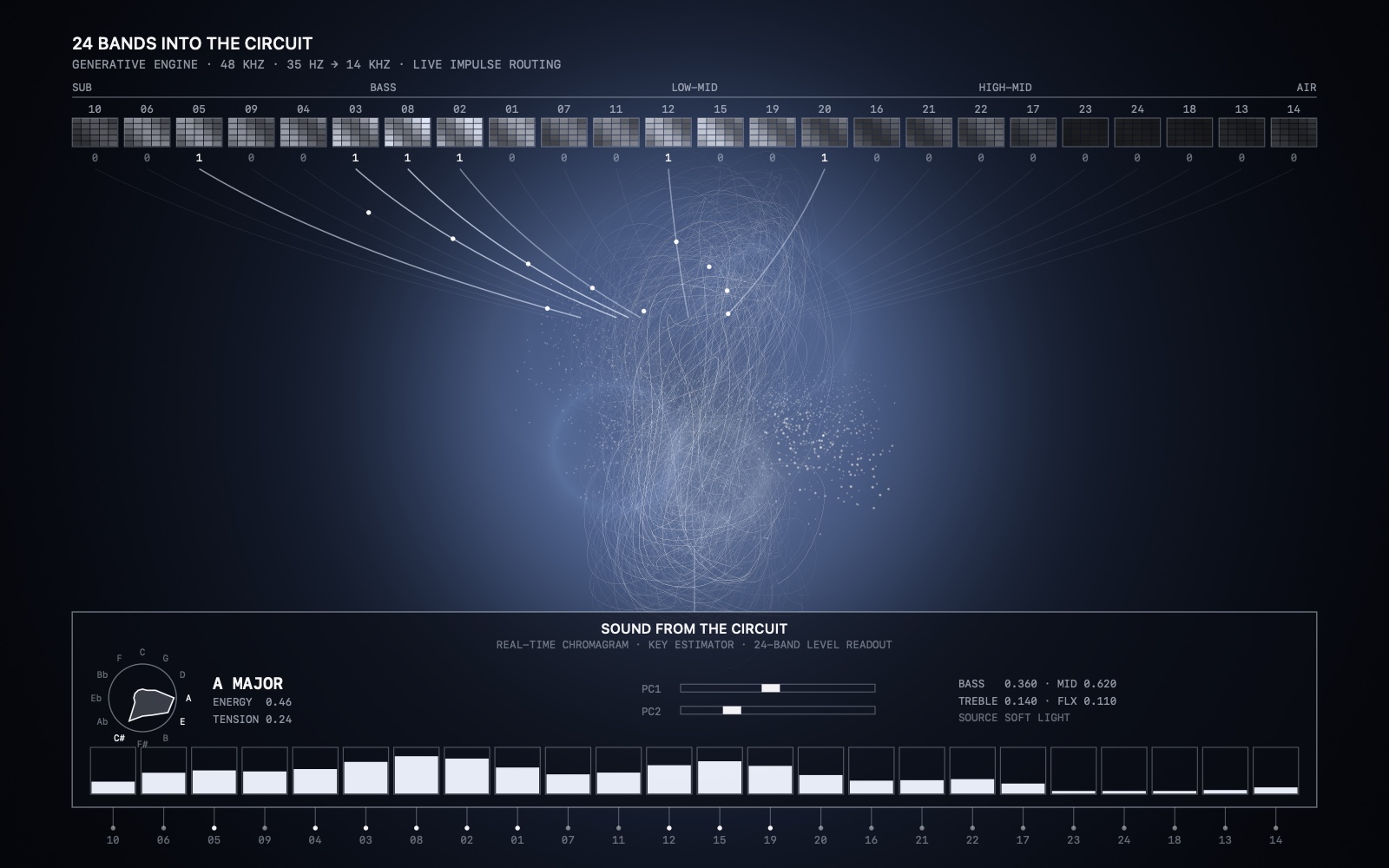
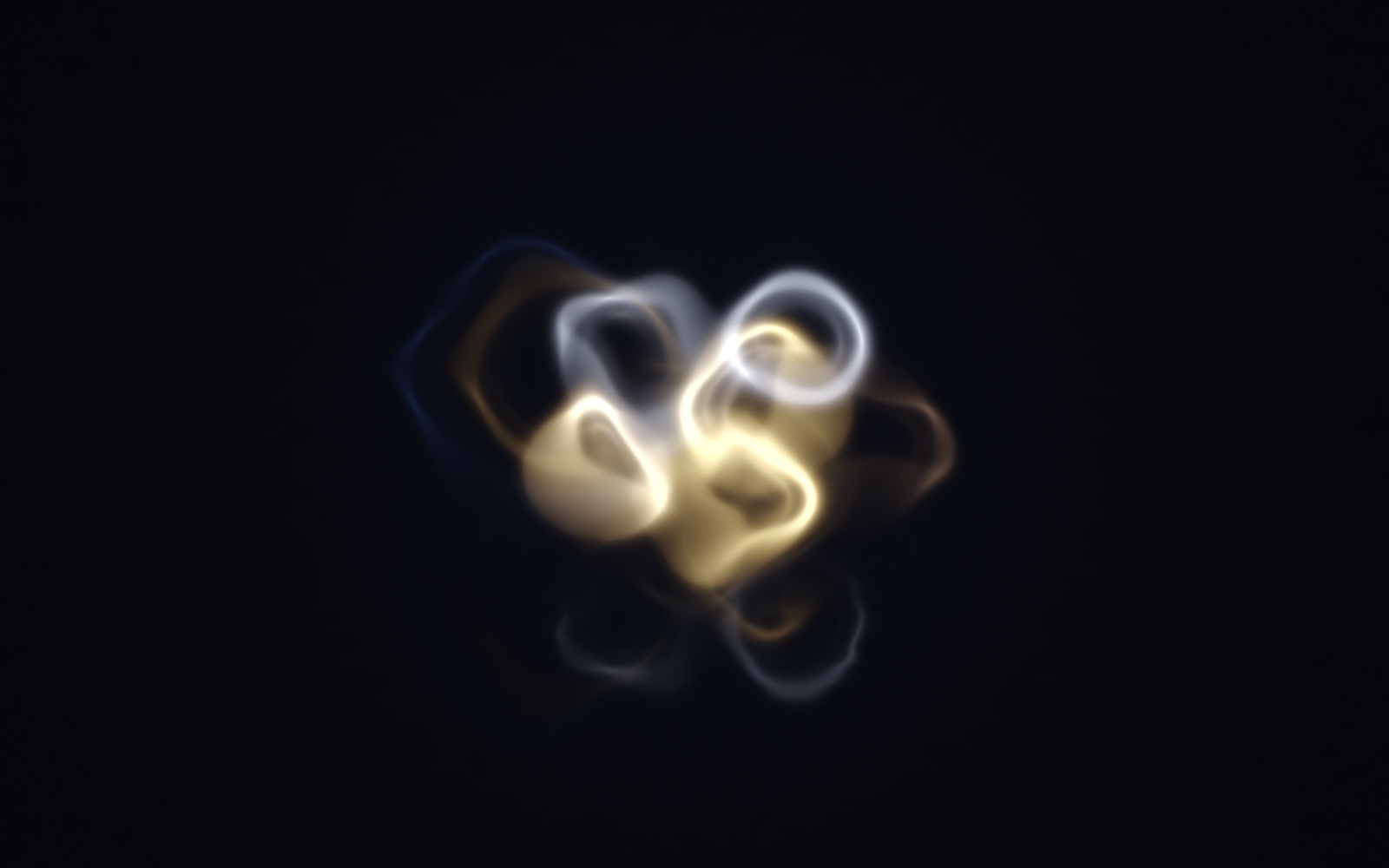
- Soft Light (Focus): felt piano, vibraphone, harp and cello at 72 beats a minute, in the manner of 1980s Japanese environmental music. Shown with The Circuit.
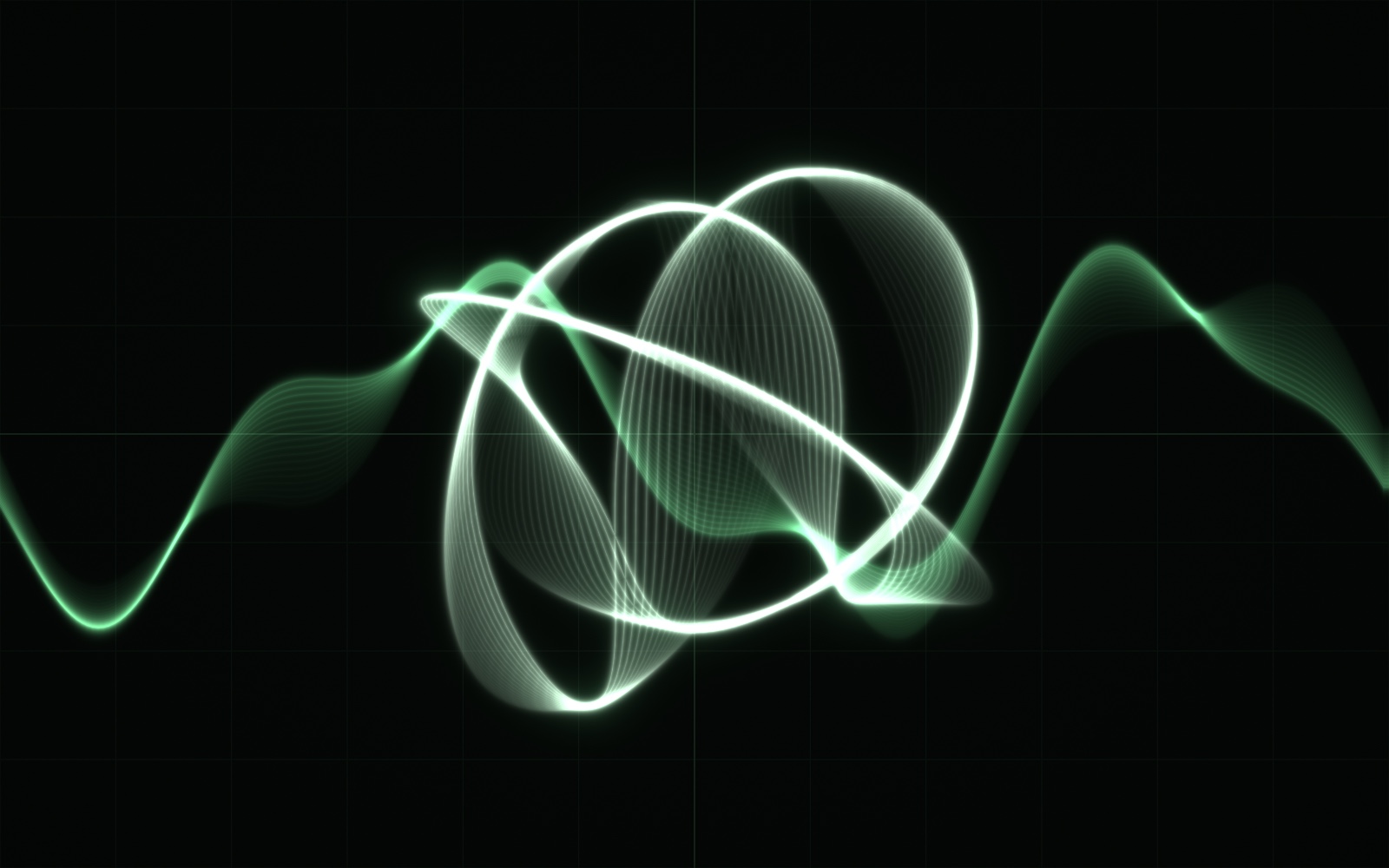
- Kinetic Pulse (Pulse): a soft analog pulse at 108 beats a minute, for when you need momentum. Shown with Phosphor Scope.
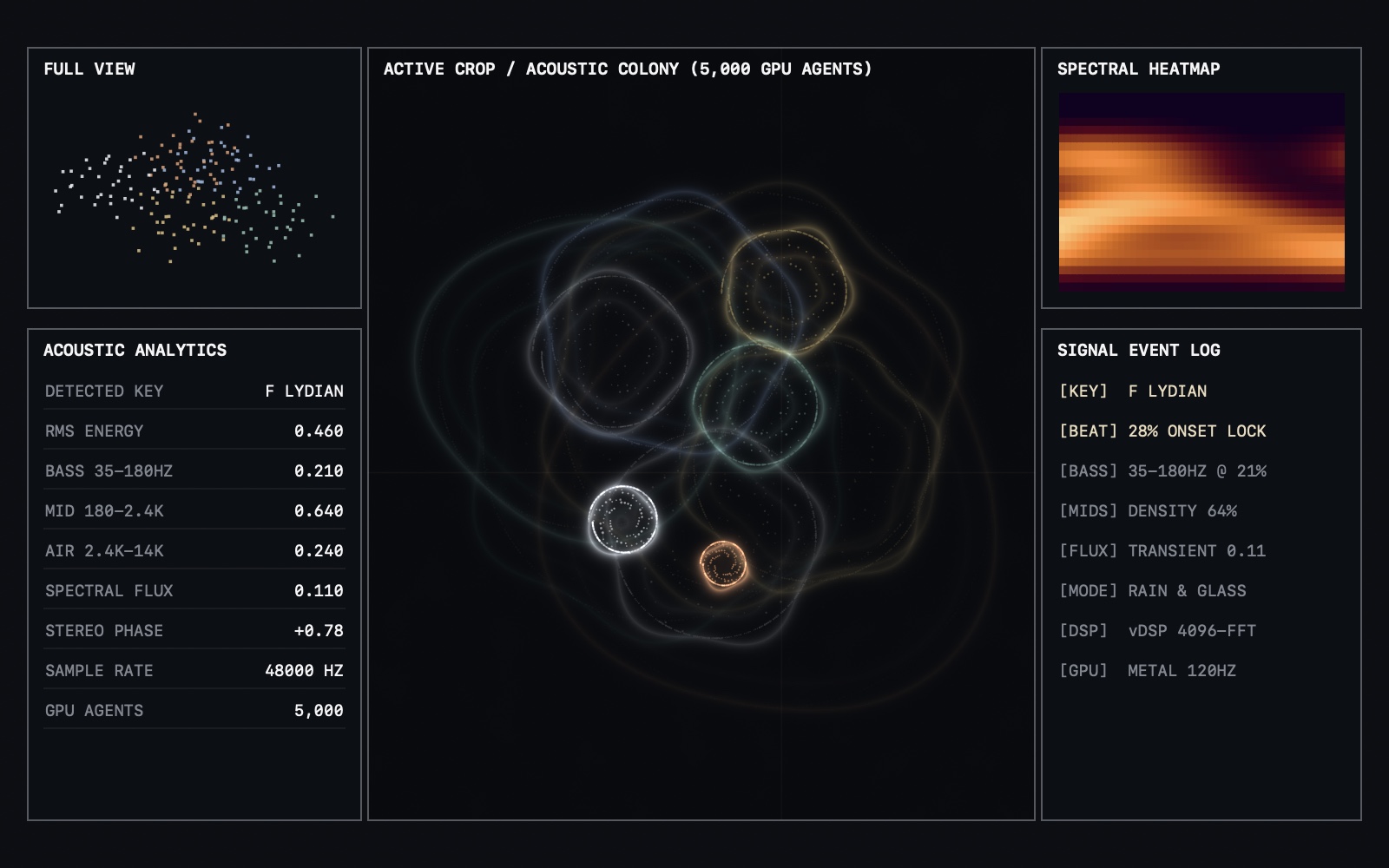
- Rain & Glass (Rain): rain that never loops, with bowed wine glasses, vibraphone and harp. Shown with Ecology Wall.
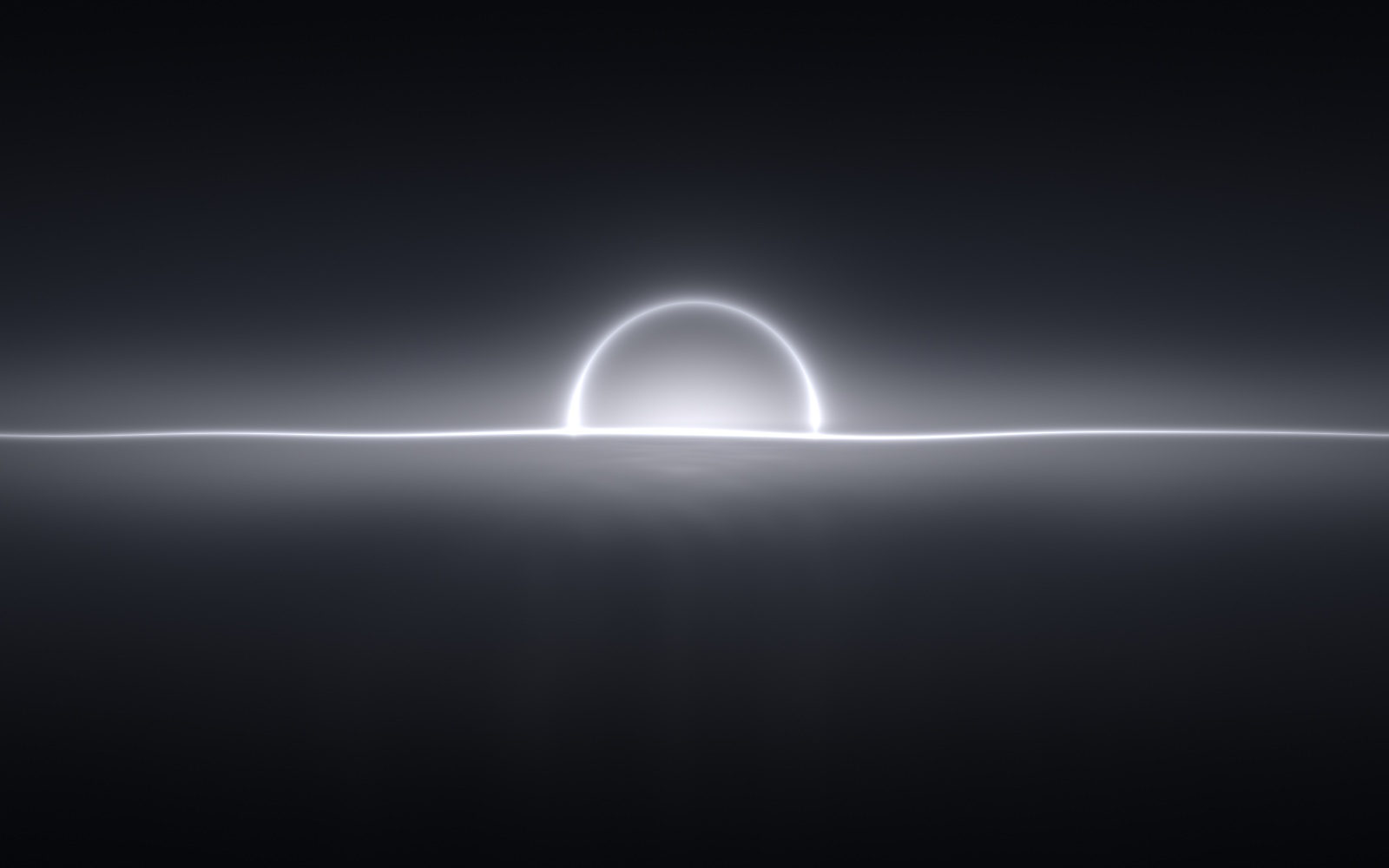
- Still: no melody at all, only a held chord and soft noise, for dense reading and writing. Shown with Horizon.
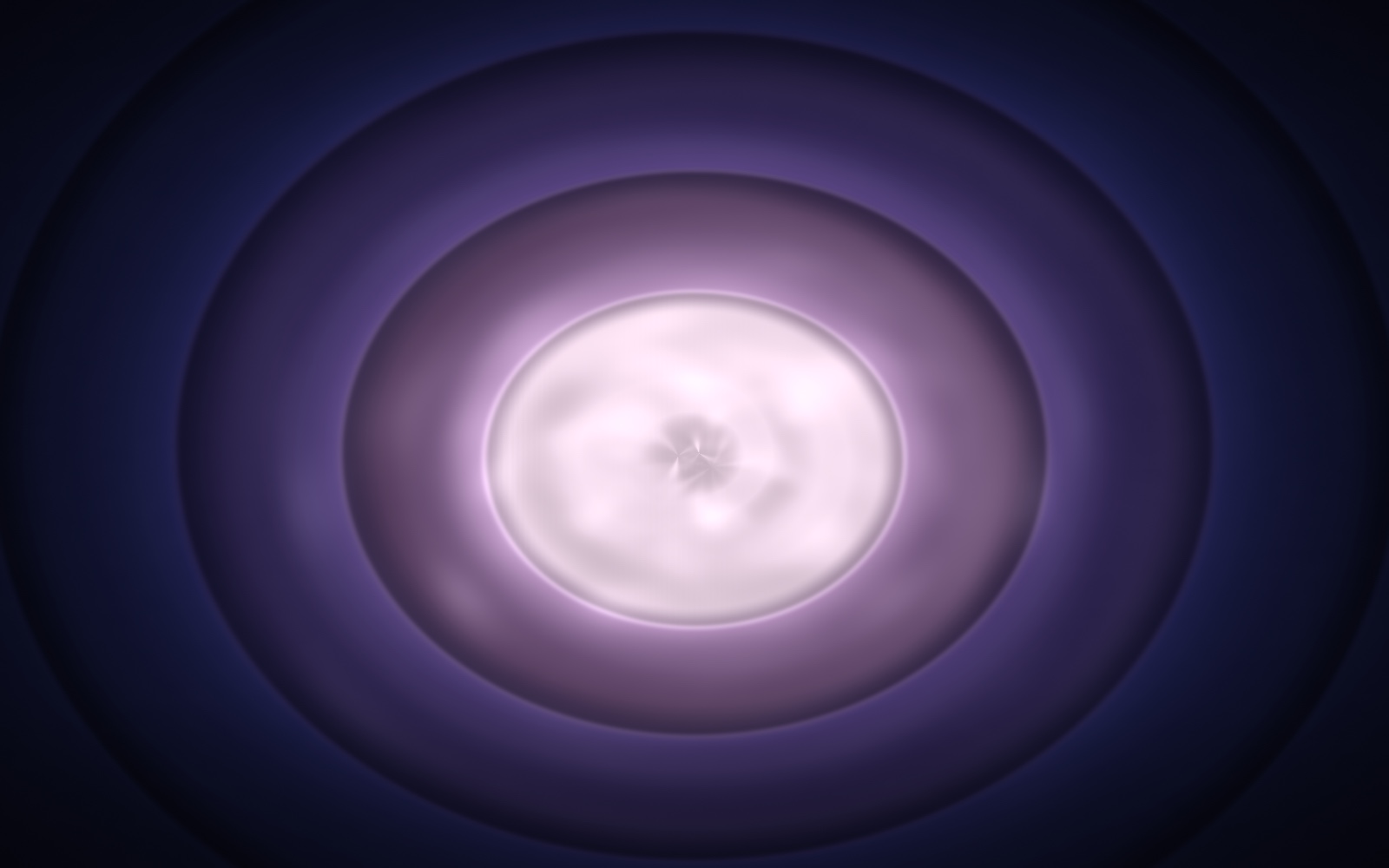
- Deep Dive (Dive, Mac only for now): a breath that slows from 8.5 to 5.5 breaths a minute, with cello, rain and singing bowls. Shown with Oculus.
- Gymnopédie (Night): slow piano and cello for late at night, with plenty of room between notes. Shown with Nocturne Silk.
Six pictures
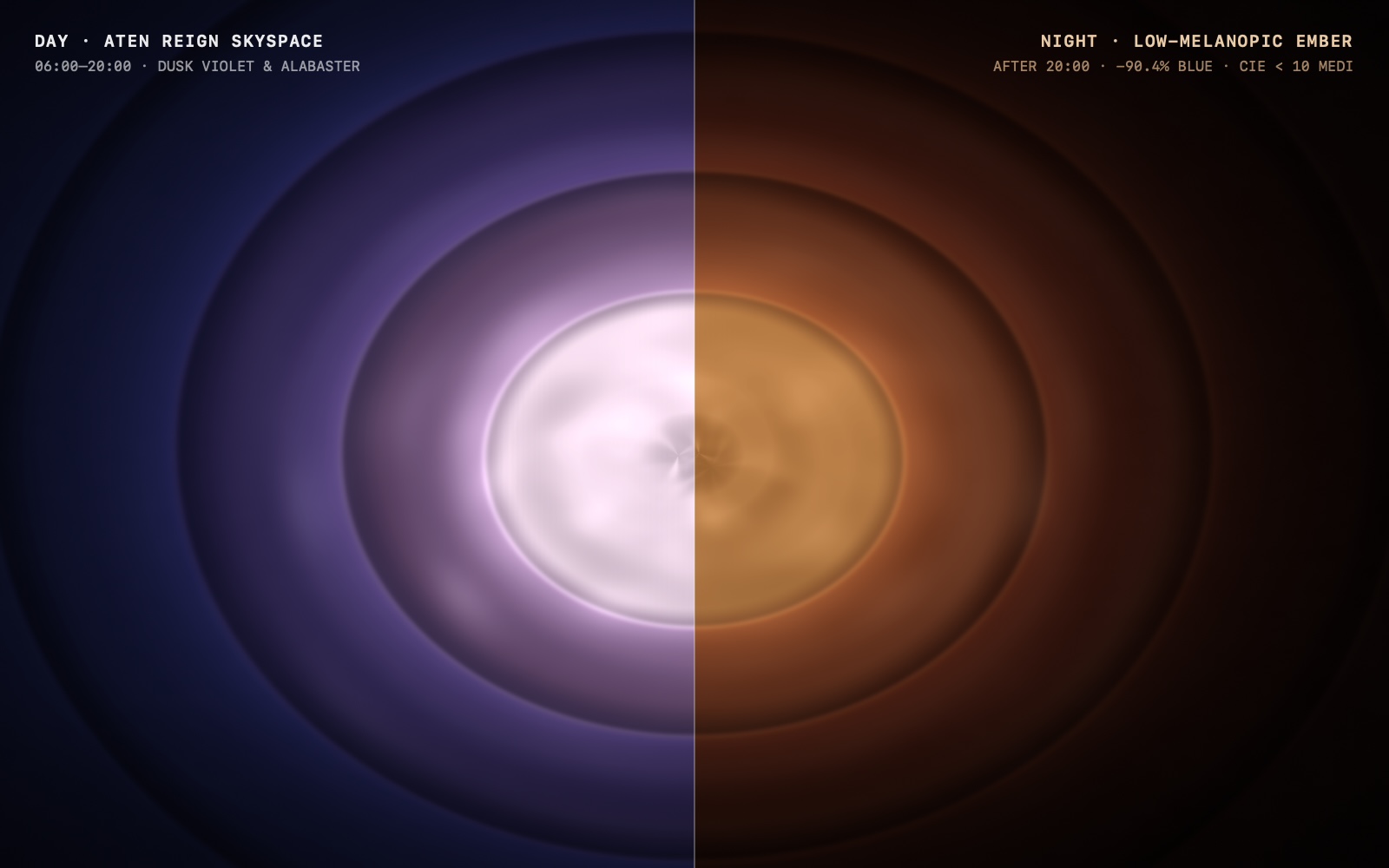
Each picture moves with the music. On screens with HDR, the brightest points glow while most of the frame stays close to black.
On iPhone and iPad
Satie for iPhone and iPad is free on the App Store. Version 3.1.0 has five worlds, in English, and also runs on Macs with Apple silicon.
- It keeps playing with the screen locked, with controls on the Lock Screen, in Control Center and on AirPods. AirPlay works too.
- It can play quietly under a podcast or audiobook, with rain or brown noise added if you like.
- A fade-out timer runs from 15 to 90 minutes and ends on a soft chime.
- Tap the picture to hide the controls, and swipe to pair any picture with any sound. On its side in a stand, it keeps the screen awake.
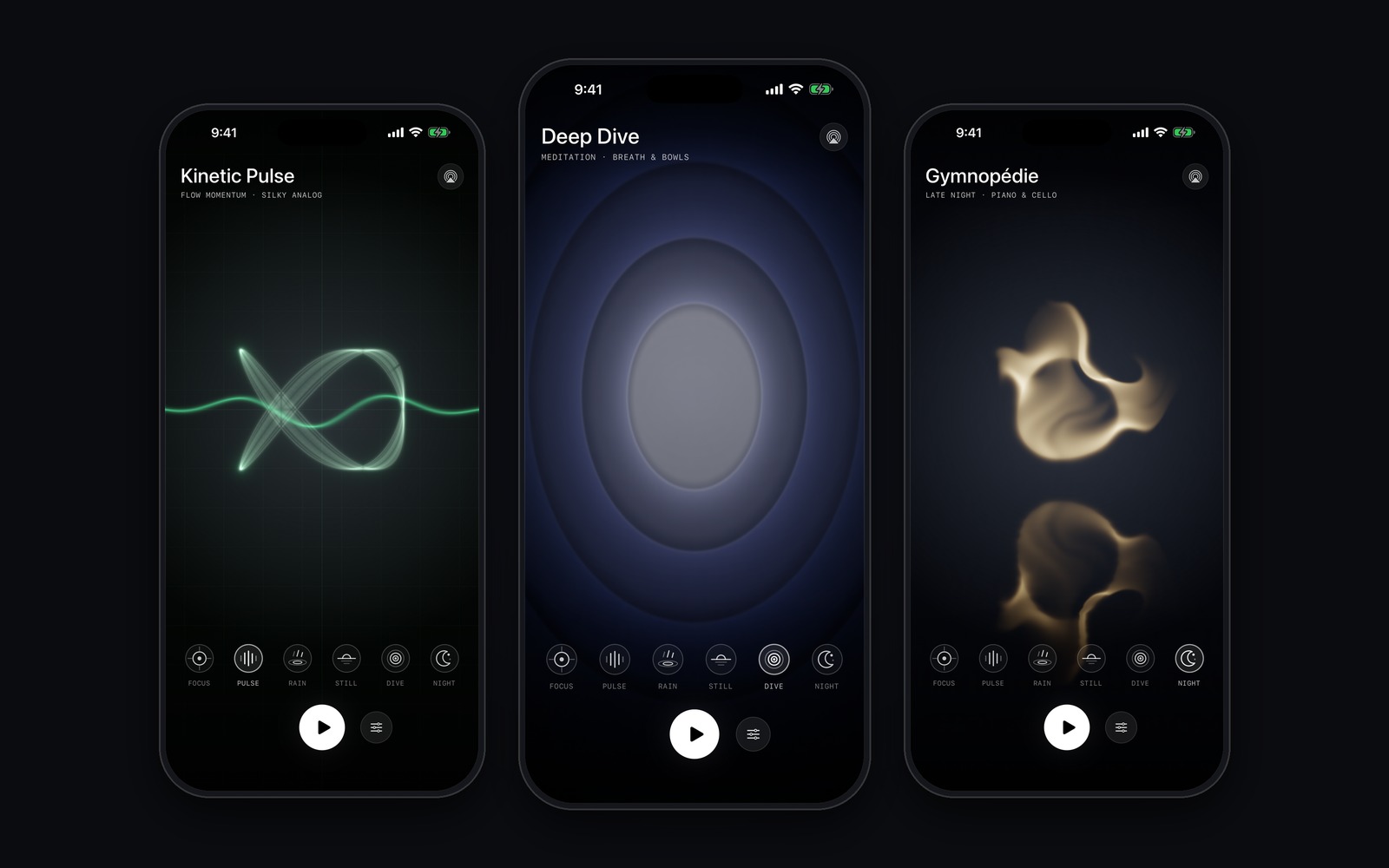
The source goes further than the App Store version: Deep Dive, Lock Screen and StandBy widgets, a timer in the Dynamic Island, and companion apps for Apple Watch, Apple TV and Vision Pro. None of those are in a store yet, but you can build them in Xcode.
How it’s built
Satie is about 15,500 lines of Swift and 1,100 lines of Metal, with no third-party packages. The music is composed a bar or two ahead on a background thread and handed to the audio thread through a lock-free queue, so playback never waits on anything. A Factor Oracle, a technique from IRCAM’s improvisation research, recombines written phrases so the music keeps changing without drifting out of key. The instruments are 46 public-domain studio samples, played through a reverb built for this project. 22 automated tests check the sound, from loudness and stereo balance to whether the music stays in key.
Sources/
├── AcousticCore/                     # Shared Swift 6 audio & formal math
│   ├── Audio/
│   │   ├── HarmonicFactorOracle.swift # O(m) Factor Oracle + grammar
│   │   ├── SatieScore.swift           # Harmonic DNA + Eno prime cycles
│   │   ├── DeepMeditationEngine.swift # Breath, rain, bowls, cello
│   │   ├── HRVResonanceController.swift # On-device HRV resonance
│   │   ├── FocusSoundEngine.swift     # Lock-free audio + SPSC queue
│   │   ├── DSPPrimitives.swift        # Velvet-Noise ER + 8×8 FDN
│   │   ├── StudioSampleBank.swift     # 46 CC0 samples + Hermite
│   │   ├── PhysicalInstruments.swift  # Piano, ZDF synth, 14.4 Hz AM
│   │   ├── ModularAlchemy.swift       # 56-mode bank, Beads, 3D pan
│   │   └── AcousticDSP.swift          # 4096-pt vDSP FFT + key
│   ├── BlueNoise64.swift              # 64×64 Ulichney blue noise
│   └── StudioLifecycleMachine.swift   # TLA+/TLC verified MTKView
├── AcousticCircuit/                  # macOS app + 120 Hz EDR Metal
│   ├── App/SatieAppIntents.swift     # Shortcuts, Siri, Focus Filters
│   ├── Renderer/Shaders.metal        # 11 EDR pipelines + blue noise
│   └── UI/PopoverView.swift          # 6 glyphs, Studio & Mini HUD
├── SatieiOS/ & SatieWidgets/         # iOS 18+, Live Activity, StandBy
└── SatieWatch/ · SatieTV/ · Vision/  # Watch HRV · tvOS · visionOS
The full story, including the bug a formal proof missed, is in the essay furniture music in swift and metal.
What the research supports
Focus and sleep audio is full of claims that don’t hold up. Before building the current version I read the research from 2022 to 2026 and kept only what has been replicated.
| Mechanism | Empirical status | How Satie handles it |
|---|---|---|
| 14–16 Hz beta amplitude modulation | Replicated fMRI, EEG phase-locking, and sustained-attention gains, strongest in listeners with attentional difficulties (Woods & Loui, Communications Biology, 2024). | Built into Kinetic Pulse as a 14.4 Hz shimmer locked to the beat, on the pads and reverb rather than the notes, so it never buzzes in headphones. |
| 0.1 Hz (~6 bpm) slow-paced breathing | Strongest replicated autonomic down-regulation mechanism; extended exhales maximize Respiratory Sinus Arrhythmia (RSA) and baroreflex synchrony across 2024–2025 RCTs. | Drives Deep Dive’s 8.5 → 5.5 bpm descent (42% inhale / 58% exhale), carried by the cello and the rings of 06 Oculus. |
| Zero lyrics & opt-in colored noise | Lyrics consistently impair reading and verbal working memory (d ≈ −0.3; Souza & Barbosa, 2023). White/pink noise helps ADHD (g ≈ +0.25) but slightly hurts neurotypicals (g ≈ −0.21; Nigg et al., JAACAP, 2024); brown noise has zero clinical RCTs. | No vocals in any world. Rain and Brown Noise stay off by default so noise is never forced on listeners it would slow down. |
| Evening melanopic light | 460–480 nm OLED emission suppresses melatonin via retinal ipRGCs; CIE consensus recommends < 10 melanopic EDI lux in the 3 hours before bed. | After 8 p.m. every picture shifts to a warm palette with about 90% less blue light. |
| Binaural beat entrainment | Weak and inconsistent: 8 of 14 strict EEG studies contradict brainwave entrainment (Ingendoh et al., PLOS ONE, 2023). | Deep Dive keeps a slight left-right detune because it makes the room sound wider. It is not sold as brainwave entrainment. |
Satie is free and MIT licensed, and its samples are public domain (CC0). Get it on the App Store for iPhone and iPad, download it for Mac or install it with Homebrew. The source is on GitHub, and the privacy policy is short because Satie collects nothing.